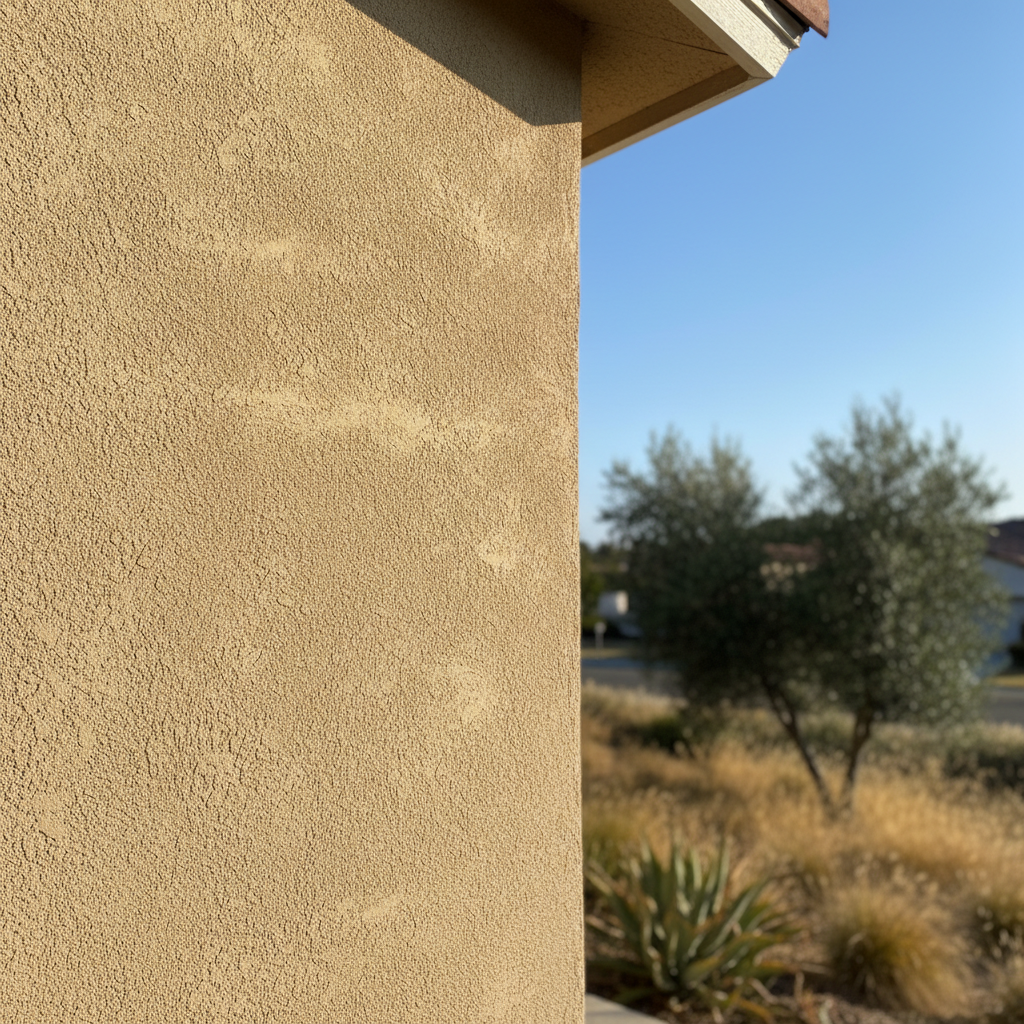
Alright, let's talk about stucco repair for a minute. You're walking around your house, maybe you spot a hairline crack, or a small chip, and your first thought pops up: "Can I fix this myself?" That's a fair question. For some things, absolutely you can. But for others, honestly, you're better off just calling in someone who does this every single day. I've seen it all out here in Burbank, from tiny fixes homeowners nailed perfectly, to big messes that started small and just got completely out of hand.
Before You Even Think About Repairing Anything
First things first, you need to figure out exactly what kind of damage you're dealing with. Not all stucco problems are created equal, you know? Is it just a hairline crack, or a larger spiderweb pattern? Maybe a hole? Or is the stucco actually delaminating – that's when it sounds hollow if you tap it.
- Hairline cracks (smaller than 1/16 inch): These are often just on the surface. They can happen from normal house settling or even temperature changes. Think about our hot Burbank summers followed by those cooler winters; that expansion and contraction can definitely cause these.
- Larger cracks or spiderweb patterns: These might point to bigger issues. We're talking structural movement or water getting in. If you see these, especially near windows or doors, seriously, put down the patching compound.
- Holes or chips: Usually, these are from some kind of impact. A rogue baseball, a ladder slipping, you know the drill. If it's small, you might be in luck.
- Stucco that sounds hollow or is crumbling: This is a big red flag. It almost certainly means water has gotten behind the stucco, and you've got a much bigger problem than a simple surface patch can fix. Don't mess with this yourself; you'd just be covering up a serious issue, and that's never good.
Oh, and always check for water stains. Any discoloration below a crack or around a window means water is getting in, and that, my friend, is a job for a professional. You absolutely need to fix the water problem first, not just the stucco.
When You Can Probably DIY It (Small Jobs Only!)
If you've got a small, isolated hairline crack or a tiny chip – maybe something about the size of a quarter – and there are no signs of water getting in or any structural issues, then sure, you can probably tackle it. Here's how it generally goes:
- Clean the area: Get rid of any loose debris, dirt, or old paint. A stiff brush usually works pretty well for this.
- Wet the area: Lightly mist the crack or hole with water. This helps the new stucco material bond better and keeps it from drying too fast.
- Apply patching compound: For hairline cracks, a good quality elastomeric stucco caulk can do the trick. If it's a small hole, use a pre-mixed stucco patch. Apply it with a trowel or putty knife, pressing it firmly into the void. Don't glob it on, though; you want it flush with the existing surface.
- Match the texture: This is the really tricky part. Most Burbank homes have either a sand finish, a dash finish, or a smooth finish. For a sand finish, you might be able to dab the patch with a sponge or a brush to mimic the texture. Dash is much harder to get right, believe me. Smooth is easier, but still needs a steady hand.
- Cure and paint: Let it cure according to the product instructions. Then, you'll probably need to paint the patched area to match your existing stucco. Good luck getting a perfect match without painting the whole wall section, honestly.
Seriously, for anything bigger than a 2-inch patch, or if you're trying to match a dash texture, you're going to spend more time and get more frustrated trying to get it right than it's worth. And it'll probably stick out like a sore thumb anyway.
When to Absolutely Call a Pro (Like Us!)
Look, I'm all for saving a buck where you can, but some jobs are just beyond the average homeowner's toolkit and skill set. You should definitely call Burbank Stucco & Plastering if you see any of these things:
- Large cracks, or cracks that go all the way through the stucco layer.
- Any signs of water damage: stains, mold, or stucco that sounds hollow. This is super critical, especially with our occasional heavy rains that can really test a building's envelope.
- Stucco that's crumbling, bulging, or actually falling off the wall.
- Damage around windows, doors, or rooflines. These are common spots for water to get in, and a proper repair involves more than just patching the surface.
- If you need to match a complex texture like a dash or skip trowel finish over a larger area. We've got the tools, the materials, and the experience to blend it in perfectly.
- If you're not comfortable on a ladder or working with these materials. Safety first, always.
The truth is, a bad patch job can look worse than the original damage, and it might not even solve the underlying problem. You could actually end up spending more money in the long run to have a professional fix your DIY attempt. We've seen it happen plenty of times, especially in older neighborhoods like the Magnolia Park area where homes have unique stucco finishes that are tough to replicate.
So, take a good, hard look at that damage. If it's truly minor and just on the surface, go for it. But if there's any doubt, or if it's a bigger issue, give us a call. We're here to help you keep your home looking good and, more importantly, protected.